Buying Guide for the Best Compact Dishwashers
Choosing the right compact dishwasher can make a significant difference in your kitchen's efficiency and cleanliness. Compact dishwashers are ideal for smaller kitchens, apartments, or for those who don't need to wash large amounts of dishes regularly. When selecting a compact dishwasher, it's important to consider several key specifications to ensure you get the best fit for your needs. Here are the most important specs to look at and how to navigate them.Size and DimensionsSize and dimensions are crucial because they determine whether the dishwasher will fit in your available space. Compact dishwashers typically range from 18 to 24 inches in width. Measure the space where you plan to install the dishwasher and ensure there is enough room for the door to open fully. If you have a very tight space, look for models that are on the smaller end of the spectrum.
CapacityCapacity refers to the number of place settings a dishwasher can handle in one cycle. Compact dishwashers usually accommodate between 6 to 8 place settings. If you live alone or with one other person, a smaller capacity may be sufficient. However, if you frequently entertain guests or have a small family, opt for a higher capacity to avoid running multiple cycles.
Energy EfficiencyEnergy efficiency is important for reducing your utility bills and minimizing your environmental impact. Look for dishwashers with an Energy Star rating, which indicates they meet certain energy efficiency guidelines. More efficient models use less water and electricity per cycle. If you are environmentally conscious or want to save on energy costs, prioritize models with higher energy efficiency ratings.
Noise LevelNoise level is measured in decibels (dB) and indicates how loud the dishwasher will be during operation. Compact dishwashers typically range from 45 to 60 dB. If you have an open-plan kitchen or are sensitive to noise, look for models with lower dB ratings (45-50 dB). For those who don't mind a bit of background noise, higher dB levels may be acceptable.
Wash Cycles and OptionsWash cycles and options refer to the different settings available for cleaning your dishes. Common cycles include normal, heavy, and quick wash. Some models offer additional options like sanitize, eco mode, or delicate wash. Consider your typical dishwashing needs: if you often have heavily soiled dishes, look for models with a heavy-duty cycle. If you want to save water and energy, an eco mode might be beneficial.
Drying PerformanceDrying performance indicates how well the dishwasher can dry your dishes after washing. Some models use heated drying, while others use air drying. Heated drying is generally more effective but can use more energy. If you prefer your dishes to be completely dry when the cycle is finished, look for models with strong drying performance. If energy consumption is a concern, consider models with efficient air drying options.
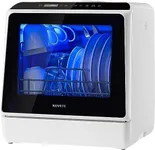
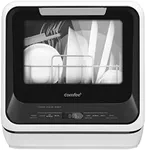
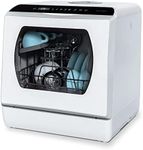
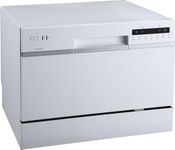
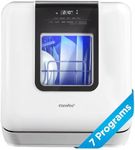
Installation TypeInstallation type refers to whether the dishwasher is built-in, portable, or countertop. Built-in models are installed under the counter and are a permanent fixture. Portable models can be moved around and connected to a faucet when needed. Countertop models sit on the counter and are ideal for very small spaces. Choose the installation type based on your kitchen layout and whether you need flexibility in moving the dishwasher.
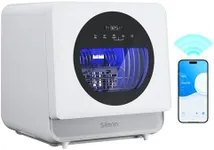
Control Panel and FeaturesThe control panel and features include the interface and additional functionalities of the dishwasher. Some models have digital touch controls, while others have manual dials. Additional features might include delay start, child lock, or smart connectivity. Consider what features are important to you: if you like modern conveniences, look for models with digital controls and smart features. If you prefer simplicity, manual controls might be more suitable.