Buying Guide for the Best Cobra Irons
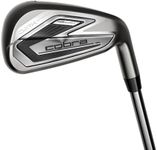
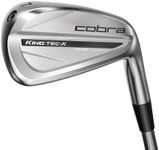
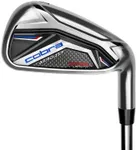
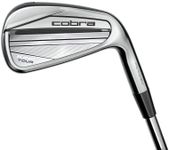
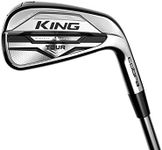
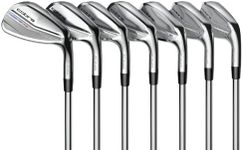
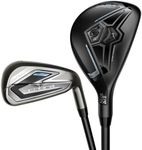
When choosing the right set of Cobra irons, it's important to consider your skill level, playing style, and personal preferences. Cobra offers a variety of irons designed to cater to different types of golfers, from beginners to professionals. Understanding the key specifications and how they impact your game will help you make an informed decision and select the best fit for you.Clubhead DesignThe clubhead design of irons can vary significantly, affecting forgiveness, distance, and control. Game improvement irons typically have larger clubheads with a cavity back design, offering more forgiveness and distance, making them ideal for beginners and high-handicap golfers. Players' irons, on the other hand, have smaller clubheads with a muscle back or blade design, providing better control and feel, which is preferred by low-handicap and professional golfers. Choose a clubhead design that matches your skill level and playing style.
Shaft MaterialIrons come with either steel or graphite shafts, each offering different benefits. Steel shafts are heavier and provide more control and accuracy, making them suitable for players with faster swing speeds. Graphite shafts are lighter and can help increase swing speed and distance, which is beneficial for players with slower swing speeds or those looking for added distance. Consider your swing speed and desired performance when selecting the shaft material.
Shaft FlexShaft flex refers to the amount of bend in the shaft during the swing, impacting the trajectory and accuracy of your shots. Common flex options include extra stiff (X), stiff (S), regular (R), senior (A), and ladies (L). Extra stiff and stiff flexes are suitable for players with faster swing speeds, providing more control and a lower ball flight. Regular, senior, and ladies flexes are designed for players with slower swing speeds, offering more distance and a higher ball flight. Match the shaft flex to your swing speed for optimal performance.
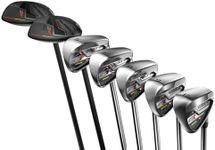
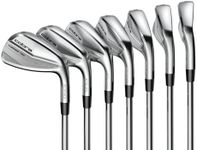
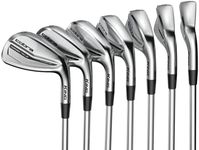
Set CompositionIron sets can vary in the number of clubs included, typically ranging from a 3-iron to a pitching wedge (PW), with some sets also including a gap wedge (GW), sand wedge (SW), or lob wedge (LW). Beginners and high-handicap golfers may benefit from a set with more clubs, providing a wider range of options for different shots. More experienced players might prefer a set with fewer clubs, focusing on the specific irons they use most frequently. Consider your skill level and the types of shots you commonly face when choosing the set composition.
LoftThe loft of an iron refers to the angle of the clubface, which affects the trajectory and distance of your shots. Higher lofted irons (e.g., pitching wedge, 9-iron) produce higher ball flights and shorter distances, while lower lofted irons (e.g., 3-iron, 4-iron) produce lower ball flights and longer distances. Understanding the lofts of the irons in your set can help you make better club selections on the course. Choose a set with lofts that complement your playing style and the distances you need to cover.
ForgivenessForgiveness in irons refers to the club's ability to minimize the impact of off-center hits, helping you achieve better results even on mishits. Game improvement irons are designed with more forgiveness, featuring larger sweet spots and perimeter weighting to reduce the negative effects of poor contact. Players' irons offer less forgiveness but provide more feedback and control for skilled golfers. Assess your consistency and accuracy when deciding on the level of forgiveness you need in your irons.