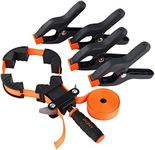
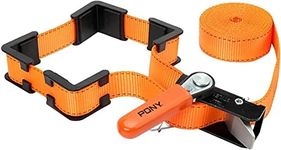
Buying Guide for the Best Clamps With Straps
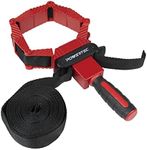
When it comes to choosing clamps with straps, it's important to understand the key specifications that will ensure you get the right tool for your needs. Clamps with straps are versatile tools used to hold objects securely in place, often used in woodworking, metalworking, and other DIY projects. By understanding the key features and how they relate to your specific requirements, you can make an informed decision and select the best clamp for your tasks.Clamping CapacityClamping capacity refers to the maximum size of the object that the clamp can hold. This is important because it determines the range of projects you can work on with the clamp. Clamps with smaller capacities are suitable for smaller, more detailed work, while those with larger capacities can handle bigger projects. To choose the right capacity, consider the typical size of the objects you will be working with and ensure the clamp can accommodate them.
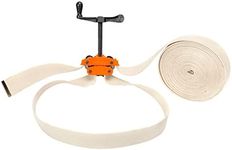
Strap LengthStrap length is the length of the strap that wraps around the object being clamped. This is crucial because it affects how large an object the clamp can secure. Shorter straps are ideal for smaller items, while longer straps are necessary for larger objects. To determine the appropriate strap length, think about the dimensions of the items you will be clamping and choose a strap that can comfortably wrap around them.
MaterialThe material of the clamp and strap affects durability and performance. Common materials include metal, plastic, and fabric. Metal clamps are generally more durable and provide stronger clamping force, making them suitable for heavy-duty tasks. Plastic clamps are lighter and may be easier to handle but might not be as strong. Fabric straps are flexible and can conform to irregular shapes, but their strength varies. Consider the type of projects you will be working on and choose a material that offers the right balance of strength and flexibility.
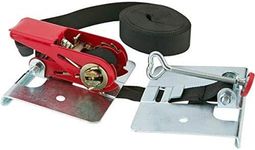
AdjustabilityAdjustability refers to how easily you can change the size and tension of the clamp. This is important for versatility and ease of use. Clamps with more adjustable features can be used for a wider range of projects and can be more convenient to operate. Look for clamps with easy-to-use adjustment mechanisms, such as quick-release levers or ratcheting systems, to ensure you can quickly and accurately set the clamp to the desired size and tension.
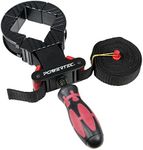
PaddingPadding on the clamp and strap helps protect the surfaces of the objects being clamped from damage. This is particularly important when working with delicate or finished surfaces. Clamps with padded jaws or straps are less likely to leave marks or scratches. If you frequently work with sensitive materials, look for clamps that offer sufficient padding to ensure your projects remain unblemished.