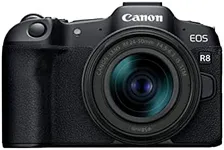
Buying Guide for the Best Canon Professional Cameras
Choosing the right professional camera can be a daunting task, especially with the wide range of options available. It's important to consider what you'll be using the camera for, as different features and specifications will be more or less important depending on your needs. Whether you're shooting portraits, landscapes, sports, or video, understanding the key specifications will help you make an informed decision and find the best fit for you.Sensor SizeThe sensor size of a camera determines the quality of the images it can produce. Larger sensors, such as full-frame sensors, capture more light and detail, resulting in higher image quality, especially in low-light conditions. APS-C sensors are smaller but still offer good quality and are often found in more compact and affordable professional cameras. If you need the highest image quality and plan to shoot in various lighting conditions, a full-frame sensor is ideal. For those who prioritize portability and cost, an APS-C sensor might be sufficient.
MegapixelsMegapixels refer to the resolution of the camera's sensor, with more megapixels allowing for larger prints and more detailed images. Cameras with higher megapixel counts are great for commercial photography, large prints, and detailed cropping. However, they also produce larger file sizes, which require more storage and processing power. If you need extremely high resolution for professional work, aim for a camera with 30 megapixels or more. For general professional use, 20-30 megapixels are usually sufficient.
Autofocus SystemThe autofocus system determines how quickly and accurately the camera can focus on a subject. Advanced autofocus systems with more focus points and better tracking capabilities are crucial for action, sports, and wildlife photography. If you frequently shoot fast-moving subjects, look for a camera with a sophisticated autofocus system. For portrait or landscape photography, a less complex autofocus system may be adequate.
Frame RateFrame rate, measured in frames per second (fps), indicates how many images the camera can capture in a second. Higher frame rates are essential for capturing fast action and ensuring you don't miss critical moments. Sports and wildlife photographers should look for cameras with at least 10 fps. For other types of photography, such as portraits or landscapes, a lower frame rate is usually sufficient.
ISO RangeThe ISO range of a camera determines its sensitivity to light. A wider ISO range allows for better performance in low-light conditions without needing a flash. Cameras with high ISO capabilities are beneficial for indoor, night, and astrophotography. If you often shoot in low-light environments, choose a camera with a broad ISO range. For well-lit conditions, a standard ISO range will suffice.
Video CapabilitiesMany professional cameras also offer advanced video capabilities, including 4K or even 8K resolution, high frame rates, and various codecs. If you plan to shoot professional-quality video, look for a camera with robust video features. Consider the resolution, frame rate, and additional features like in-body stabilization and audio input options. For photographers who occasionally shoot video, basic 1080p or 4K video capabilities may be enough.
Build Quality and Weather SealingProfessional cameras are often used in challenging environments, so build quality and weather sealing are important. A robust, weather-sealed camera can withstand dust, moisture, and rough handling, making it suitable for outdoor and travel photography. If you frequently shoot in harsh conditions, prioritize a camera with strong build quality and weather sealing. For studio or controlled environments, these features may be less critical.
Battery LifeBattery life is crucial for long shooting sessions, especially when you're on location without easy access to power. Cameras with longer battery life allow you to shoot for extended periods without interruption. If you often shoot events, wildlife, or travel, look for a camera with a high-capacity battery. For shorter sessions or studio work, battery life may be less of a concern.
Connectivity OptionsModern professional cameras offer various connectivity options, including Wi-Fi, Bluetooth, and NFC, which allow for easy transfer of images and remote control of the camera. These features can be particularly useful for studio work, tethered shooting, and quick sharing of images. If you need to transfer images quickly or control your camera remotely, prioritize models with advanced connectivity options. For those who don't require these features, basic connectivity may be sufficient.