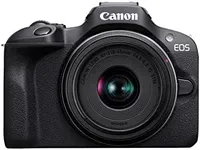
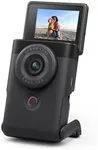
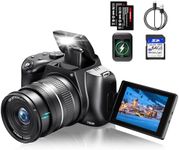
Buying Guide for the Best Canon 4 K Camera
When choosing a Canon 4K camera, it's important to consider several key specifications to ensure you get the best fit for your needs. Understanding these specs will help you make an informed decision based on what you plan to use the camera for, whether it's professional videography, casual shooting, or something in between. Here are the key specs you should pay attention to and how to navigate them.ResolutionResolution refers to the number of pixels that make up the image or video. In the case of 4K cameras, this means a resolution of 3840 x 2160 pixels. Higher resolution provides more detail and clarity, which is crucial for professional videography and high-quality content creation. If you need the highest level of detail for professional work, 4K is essential. For casual use, while 4K is nice to have, you might not need it as much as professionals do.
Sensor SizeThe sensor size affects the quality of the image, especially in low light conditions. Larger sensors capture more light and provide better image quality. Full-frame sensors are the largest and offer the best quality, ideal for professional photographers and videographers. APS-C sensors are smaller but still provide excellent quality and are more affordable, suitable for enthusiasts and semi-professionals. Micro Four Thirds sensors are even smaller and more compact, making them great for travel and casual use.
Frame RateFrame rate is the number of frames captured per second (fps). Higher frame rates allow for smoother video and slow-motion effects. Common frame rates include 24fps for a cinematic look, 30fps for standard video, and 60fps or higher for smooth motion and slow-motion capabilities. Choose a camera with a frame rate that matches your intended use. For cinematic projects, 24fps is ideal, while for sports or action shots, 60fps or higher is preferable.
Autofocus SystemThe autofocus system determines how quickly and accurately the camera can focus on subjects. Advanced autofocus systems with more focus points and better tracking capabilities are essential for capturing fast-moving subjects and ensuring sharp focus. If you plan to shoot a lot of action or need reliable focus for professional work, look for a camera with a robust autofocus system. For more static subjects or casual use, a simpler autofocus system may suffice.
ConnectivityConnectivity options like Wi-Fi, Bluetooth, and HDMI are important for transferring files, remote control, and live streaming. Wi-Fi and Bluetooth allow for easy sharing and remote control via smartphone apps, while HDMI outputs are crucial for connecting to external monitors and recorders. If you need to share content quickly or use external devices, ensure the camera has the necessary connectivity options. For basic use, these features might be less critical.
Battery LifeBattery life determines how long you can shoot before needing to recharge or replace the battery. Longer battery life is essential for extended shooting sessions, such as events or long video projects. If you plan to shoot for extended periods, look for a camera with a long-lasting battery or the option to use external power sources. For shorter, casual shoots, battery life may be less of a concern.
Size and WeightThe size and weight of the camera affect its portability and ease of use. Larger, heavier cameras often offer more features and better ergonomics for professional use, but they can be cumbersome to carry around. Smaller, lighter cameras are more portable and convenient for travel and casual shooting. Consider how you plan to use the camera and choose a size and weight that fits your needs. If you need a camera for professional work, a larger model might be worth the extra weight. For travel or casual use, a compact, lightweight camera is more practical.