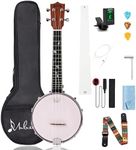
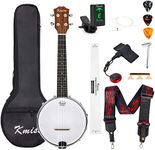
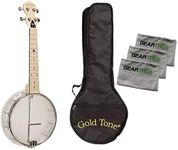
Buying Guide for the Best Banjo Ukuleles
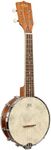
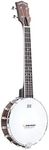
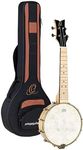
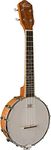
Choosing the right banjo-ukulele can be a delightful experience if you know what to look for. Banjo-ukuleles, also known as banjoleles, combine the body of a banjo with the neck of a ukulele, offering a unique sound and playing experience. To find the best fit for you, consider the following key specifications and how they align with your needs and preferences.SizeBanjo-ukuleles come in different sizes, typically soprano, concert, tenor, and baritone. The size affects the instrument's sound and playability. Soprano is the smallest and has a bright, punchy sound, making it great for beginners or those with smaller hands. Concert size offers a bit more room on the fretboard and a fuller sound, suitable for intermediate players. Tenor is larger still, providing a deeper tone and more space for complex fingerings, ideal for advanced players. Baritone is the largest, with a rich, deep sound, and is best for those who prefer a lower pitch. Choose a size that feels comfortable to hold and play, and that matches the sound you are looking for.
MaterialThe materials used in the construction of a banjo-ukulele significantly impact its sound and durability. Common materials include wood, metal, and plastic. Wooden banjo-ukuleles, often made from mahogany, maple, or koa, tend to produce a warm, resonant tone and are generally more durable. Metal components, such as the rim and hardware, can add brightness and sustain to the sound. Plastic banjo-ukuleles are usually more affordable and lightweight but may not offer the same tonal quality as wood. Consider the type of music you want to play and the environment in which you'll be playing when choosing the material.
Number of FretsThe number of frets on a banjo-ukulele determines the range of notes you can play. Most banjo-ukuleles have between 12 and 18 frets. Fewer frets (12-15) are common on soprano and concert sizes, providing a more traditional ukulele range, which is suitable for strumming and simple melodies. More frets (16-18) are found on tenor and baritone sizes, offering a wider range of notes for more complex playing and soloing. If you are a beginner or primarily play chords, fewer frets may be sufficient. If you are an advanced player or enjoy playing solos, consider a model with more frets.
TuningBanjo-ukuleles can be tuned in various ways, with the most common being GCEA (standard ukulele tuning) and DGBE (baritone ukulele tuning). GCEA tuning is familiar to most ukulele players and is great for traditional ukulele music and strumming. DGBE tuning is similar to the top four strings of a guitar, making it a good choice for guitar players transitioning to banjo-ukulele or for those who prefer a deeper sound. Choose the tuning that matches your playing style and the type of music you enjoy.
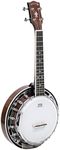
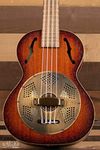
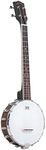
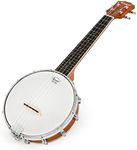
Resonator vs. Open BackBanjo-ukuleles can have either a resonator or an open back. A resonator is a backplate that projects the sound forward, making the instrument louder and giving it a brighter tone. This is ideal for playing in larger groups or performances where you need more volume. An open-back banjo-ukulele has a softer, mellower sound and is lighter in weight, making it suitable for solo practice or smaller, more intimate settings. Consider where and how you will be playing when deciding between a resonator and an open-back model.