Buying Guide for the Best Bagged Canister Vacuums
When choosing a bagged canister vacuum, it's important to consider several key specifications to ensure you select the best model for your needs. Bagged canister vacuums are known for their powerful suction, versatility, and ease of use. They are particularly effective for cleaning a variety of surfaces, including carpets, hardwood floors, and upholstery. To make an informed decision, you should understand the key specifications and how they relate to your cleaning requirements.Suction PowerSuction power is a measure of how effectively the vacuum can pick up dirt and debris. It is usually measured in watts or air watts. Higher suction power means better cleaning performance, especially on carpets and rugs. For homes with thick carpets or pets, a vacuum with higher suction power (around 300-400 air watts) is ideal. For homes with mostly hard floors, a lower suction power (around 200-300 air watts) may suffice. Consider your flooring type and the amount of dirt and debris typically present in your home when choosing the suction power.
Filtration SystemThe filtration system in a vacuum determines how well it can trap dust, allergens, and other particles. HEPA (High-Efficiency Particulate Air) filters are the gold standard, capturing 99.97% of particles as small as 0.3 microns. This is especially important for households with allergy sufferers or pets. If air quality is a concern, opt for a vacuum with a HEPA filter. For general use, a standard filter may be sufficient, but ensure it is easy to replace and maintain.
Bag CapacityBag capacity refers to the amount of dirt and debris the vacuum can hold before the bag needs to be replaced. Larger capacities mean fewer bag changes, which is convenient for larger homes or frequent cleaning. Bag capacities typically range from 2 to 5 liters. For smaller homes or less frequent cleaning, a smaller capacity (2-3 liters) may be adequate. For larger homes or heavy use, look for a vacuum with a larger capacity (4-5 liters) to reduce the frequency of bag changes.
Weight and ManeuverabilityThe weight and maneuverability of a vacuum affect how easy it is to use, especially if you need to carry it up and down stairs or move it around furniture. Lighter vacuums (under 10 pounds) are easier to handle and transport, making them ideal for multi-level homes or those with limited strength. Heavier models (over 10 pounds) may offer more stability and power but can be cumbersome to move. Consider your physical capabilities and the layout of your home when choosing the weight and maneuverability of your vacuum.
Noise LevelThe noise level of a vacuum is measured in decibels (dB). Quieter vacuums (under 70 dB) are less disruptive and more pleasant to use, especially in homes with young children or pets. Louder vacuums (over 70 dB) may offer more power but can be intrusive. If noise is a concern, look for models specifically designed to operate quietly. Consider when and where you will be using the vacuum to determine the acceptable noise level for your needs.
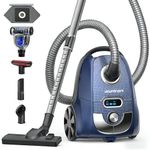
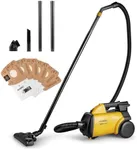
Attachments and AccessoriesAttachments and accessories enhance the versatility of a vacuum, allowing you to clean different surfaces and hard-to-reach areas. Common attachments include crevice tools, dusting brushes, and upholstery tools. If you have specific cleaning needs, such as pet hair removal or delicate surfaces, look for vacuums that come with specialized attachments. Consider the types of surfaces and areas you need to clean regularly to determine which attachments will be most useful for you.
Cord Length and RetractabilityCord length determines how far you can move the vacuum without needing to switch power outlets. Longer cords (over 25 feet) offer more flexibility and convenience, especially in larger rooms. Retractable cords are a handy feature that allows for easy storage and reduces the risk of tangling. If you have large rooms or limited power outlets, opt for a vacuum with a longer, retractable cord. For smaller spaces, a shorter cord (15-20 feet) may be sufficient.