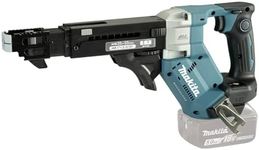
Buying Guide for the Best Auto Feed Screw Guns
Auto-feed screw guns are essential tools for anyone involved in construction, carpentry, or DIY projects. They are designed to drive screws quickly and efficiently, saving you time and effort compared to manual screwdrivers or traditional power drills. When choosing an auto-feed screw gun, it's important to consider several key specifications to ensure you get the best tool for your needs. Understanding these specs will help you make an informed decision and select a screw gun that matches your specific requirements.Screw CapacityScrew capacity refers to the number of screws the gun can hold at one time. This is important because a higher capacity means fewer reloads, which can save you time on large projects. Screw guns typically come with capacities ranging from a few dozen to several hundred screws. If you are working on large-scale projects, a higher capacity will be beneficial. For smaller tasks or occasional use, a lower capacity may be sufficient.
Screw Size CompatibilityScrew size compatibility indicates the range of screw lengths and diameters that the gun can handle. This is crucial because using the wrong size screws can damage your materials or the tool itself. Screw guns usually support a range of sizes, such as 1 to 3 inches in length and various diameters. Consider the types of projects you will be working on and choose a screw gun that can accommodate the screw sizes you commonly use.
Power SourceThe power source of an auto-feed screw gun can be either corded (electric) or cordless (battery-powered). This spec is important because it affects the tool's portability and runtime. Corded screw guns offer continuous power and are ideal for long, uninterrupted tasks, but they require access to an electrical outlet. Cordless screw guns provide greater mobility and are suitable for working in areas without power access, but their runtime is limited by battery life. Choose based on where and how long you will be using the tool.
Speed (RPM)Speed, measured in revolutions per minute (RPM), determines how quickly the screw gun can drive screws. Higher speeds allow for faster work, which is beneficial for large projects. Screw guns typically range from 2,000 to 6,000 RPM. For heavy-duty tasks, a higher RPM is preferable. For more precise or delicate work, a lower RPM may be more suitable to avoid overdriving screws.
TorqueTorque is the force the screw gun applies to drive screws into materials. This is important because different materials require different levels of torque. Higher torque is needed for harder materials like hardwood or metal, while lower torque is sufficient for softer materials like drywall. Screw guns often have adjustable torque settings, allowing you to customize the force based on your project needs. Consider the types of materials you will be working with and choose a screw gun with appropriate torque settings.
Weight and ErgonomicsWeight and ergonomics refer to how heavy the tool is and how comfortable it is to use. This is important because a lighter, well-balanced tool reduces fatigue during extended use. Ergonomic features like a comfortable grip and easy-to-reach controls can also enhance usability. If you plan to use the screw gun for long periods, prioritize models that are lightweight and ergonomically designed to minimize strain.
Depth AdjustmentDepth adjustment allows you to control how deep the screws are driven into the material. This is important for achieving a consistent finish and preventing damage to the material. Screw guns with easy-to-use depth adjustment settings provide greater control and precision. If your projects require varying screw depths, look for a screw gun with a reliable and straightforward depth adjustment mechanism.