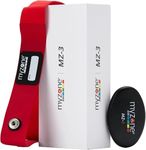
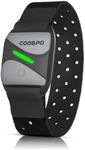
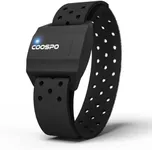
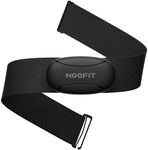
Buying Guide for the Best Apple Watch Chest Straps
When choosing an Apple Watch chest strap, it's important to consider several key specifications to ensure you get the best fit for your needs. These straps are designed to enhance your fitness tracking by providing more accurate heart rate data. Understanding the different features and how they align with your personal requirements will help you make an informed decision.CompatibilityCompatibility refers to whether the chest strap works with your specific model of Apple Watch. This is crucial because not all chest straps are designed to work with every model. To navigate this, check the product description to see if your Apple Watch model is listed. If you have a newer model, ensure the strap supports the latest technology. If you have an older model, make sure the strap is backward compatible. Choose a strap that is specifically designed to work seamlessly with your Apple Watch to ensure accurate data transmission.
Heart Rate AccuracyHeart rate accuracy is a measure of how precisely the chest strap can monitor your heart rate. This is important for tracking your fitness progress and ensuring your workouts are effective. Chest straps generally offer more accurate readings than wrist-based sensors. Look for straps that are known for high accuracy, often indicated by user reviews and product specifications. If you are a serious athlete or someone who relies heavily on precise heart rate data, opt for a strap with a reputation for superior accuracy.
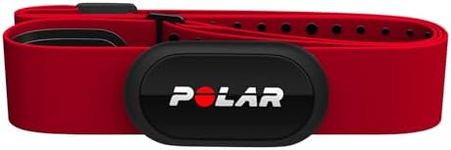
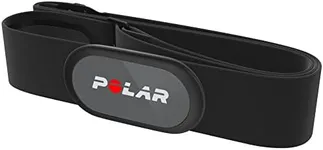
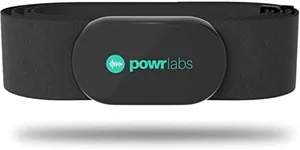
Comfort and FitComfort and fit refer to how the chest strap feels when worn and how well it stays in place during activities. This is important because an uncomfortable strap can distract you from your workout, and a poor fit can lead to inaccurate readings. Straps come in different materials and designs, such as adjustable elastic bands or more rigid structures. If you engage in high-intensity workouts, look for a strap that offers a secure fit and is made from moisture-wicking materials. For general fitness, a comfortable, adjustable strap may be sufficient.
Battery LifeBattery life indicates how long the chest strap can operate before needing a recharge or battery replacement. This is important for convenience and ensuring the strap is always ready for use. Battery life can vary significantly between models, from a few hours to several months. If you plan to use the strap frequently, look for one with a longer battery life to avoid frequent recharging. For occasional use, a shorter battery life may be acceptable. Consider your usage patterns to determine the best option for you.
Water ResistanceWater resistance refers to the strap's ability to withstand exposure to water without being damaged. This is important if you plan to use the strap during activities like swimming or in wet conditions. Water resistance is usually measured in meters or ATM (atmospheres). For swimming, look for a strap with a higher water resistance rating, such as 5 ATM or more. For general fitness activities where you might sweat or encounter rain, a lower rating may suffice. Choose a strap that matches your typical workout environment.
ConnectivityConnectivity refers to how the chest strap communicates with your Apple Watch, typically via Bluetooth. This is important for ensuring seamless data transfer and real-time monitoring. Some straps offer additional connectivity options, such as ANT+ for use with other fitness devices. Ensure the strap supports Bluetooth and is compatible with your Apple Watch's version. If you use multiple fitness devices, consider a strap with multi-device connectivity. Choose a strap that offers reliable and stable connectivity to avoid data loss during workouts.