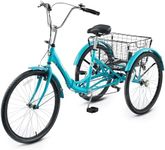
Buying Guide for the Best Adult Tricycles For Disabled
Choosing the right adult tricycle for a disabled person involves understanding their specific needs and preferences. Adult tricycles can provide stability, comfort, and independence for those who may have difficulty balancing on a traditional bicycle. When selecting a tricycle, it's important to consider various specifications to ensure it meets the user's requirements and enhances their mobility experience.Frame MaterialThe frame material of a tricycle affects its weight, durability, and ease of use. Common materials include steel, aluminum, and carbon fiber. Steel frames are strong and durable but can be heavy, making them less ideal for users who need to transport the tricycle frequently. Aluminum frames are lighter and resistant to rust, offering a good balance between weight and strength. Carbon fiber frames are the lightest and most expensive, providing excellent performance but may not be necessary for all users. Consider the user's strength and transportation needs when choosing the frame material.
Wheel SizeWheel size impacts the tricycle's stability, speed, and ease of maneuverability. Common wheel sizes for adult tricycles range from 20 to 26 inches. Smaller wheels (20 inches) offer better stability and are easier to mount and dismount, making them suitable for users with limited mobility or balance issues. Larger wheels (24-26 inches) provide a smoother ride and can handle rougher terrain, which may be beneficial for users who plan to ride outdoors frequently. Choose a wheel size that matches the user's intended use and comfort level.
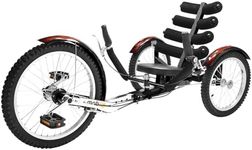
Seat TypeThe seat type is crucial for comfort and support, especially for users with disabilities. There are various seat options, including traditional bike seats, recumbent seats, and saddle seats. Traditional bike seats are narrow and may not provide enough support for some users. Recumbent seats offer a more relaxed, reclined position with back support, making them ideal for users with back issues or those who prefer a more comfortable ride. Saddle seats are wider and provide more support, suitable for users who need extra stability. Consider the user's comfort and any specific health needs when selecting the seat type.
Gearing SystemThe gearing system determines how easy it is to pedal the tricycle, especially on different terrains. Single-speed tricycles are simple to use and maintain but may be challenging on hills or uneven surfaces. Multi-speed tricycles offer a range of gears, making it easier to pedal on various terrains and providing more flexibility for the user. For users who plan to ride on flat surfaces, a single-speed tricycle may suffice. However, for those who will encounter hills or prefer more control over their pedaling effort, a multi-speed tricycle is a better choice.
Braking SystemThe braking system is essential for safety and control. Common types include rim brakes, disc brakes, and coaster brakes. Rim brakes are affordable and easy to maintain but may not perform well in wet conditions. Disc brakes offer superior stopping power and perform well in all weather conditions, making them a good choice for users who ride outdoors frequently. Coaster brakes are activated by pedaling backward and are simple to use, suitable for users with limited hand strength or dexterity. Choose a braking system that provides the necessary safety and ease of use for the user.
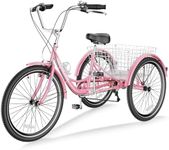
Step-Through DesignA step-through design allows for easier mounting and dismounting of the tricycle, which is particularly important for users with limited mobility or flexibility. This design features a low frame that the user can step over rather than lifting their leg high to get on the tricycle. For users with physical disabilities or those who find it difficult to mount a traditional bike, a step-through design can provide greater independence and ease of use. Consider the user's physical capabilities and comfort when choosing a tricycle with this feature.
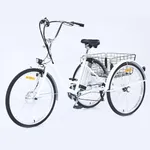
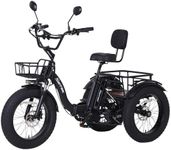
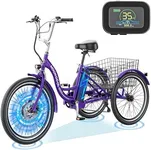
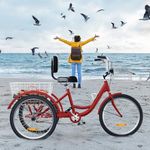
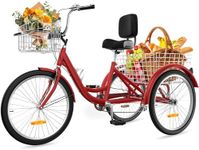
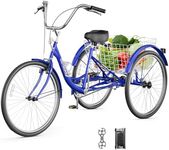
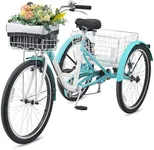
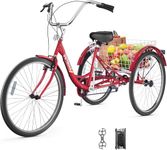
Additional FeaturesAdditional features such as baskets, lights, and mirrors can enhance the usability and safety of the tricycle. Baskets provide convenient storage for personal items or groceries, making the tricycle more practical for daily use. Lights and reflectors improve visibility, especially when riding in low-light conditions, enhancing safety. Mirrors allow the user to see behind them without turning their head, which can be helpful for those with limited neck mobility. Consider the user's lifestyle and specific needs when selecting additional features to ensure the tricycle is as functional and safe as possible.