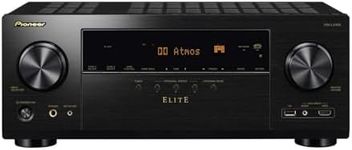
Buying Guide for the Best 9 1 2 Channel Atmos Receivers
When choosing a 9.1.2 channel Atmos receiver, it's important to understand the key specifications and how they impact your overall audio experience. A 9.1.2 channel receiver is designed to provide an immersive sound experience with nine main channels, one subwoofer channel, and two overhead channels for Dolby Atmos effects. This setup is ideal for creating a three-dimensional sound field in your home theater. To make an informed decision, consider the following key specifications and how they align with your needs and preferences.Power OutputPower output, measured in watts per channel, indicates how much power the receiver can deliver to your speakers. This is important because it affects the loudness and clarity of the sound. Generally, higher power output means better performance, especially in larger rooms. For small to medium-sized rooms, 80-100 watts per channel is usually sufficient. For larger rooms or if you prefer very high volume levels, look for receivers with 100-150 watts per channel. Consider your room size and listening habits when choosing the right power output for you.
Connectivity OptionsConnectivity options refer to the various inputs and outputs available on the receiver, such as HDMI, optical, coaxial, and analog connections. This is important because it determines how many and what types of devices you can connect to your receiver. Look for a receiver with multiple HDMI inputs if you plan to connect several devices like a Blu-ray player, gaming console, and streaming device. Additionally, ensure it has HDMI outputs that support ARC (Audio Return Channel) or eARC (Enhanced Audio Return Channel) for easy connection to your TV. Consider your current and future devices to ensure the receiver has the necessary connectivity options.
Audio Formats SupportedAudio formats supported by the receiver include Dolby Atmos, DTS:X, and other surround sound formats. This is important because it affects the types of audio experiences you can enjoy. Dolby Atmos and DTS:X provide immersive, three-dimensional sound, which is ideal for home theater setups. Ensure the receiver supports these formats if you want the best audio experience. Additionally, check for support of other formats like Dolby TrueHD and DTS-HD Master Audio for high-definition audio. Choose a receiver that supports the audio formats you plan to use most frequently.
Room CalibrationRoom calibration is a feature that automatically adjusts the audio settings of the receiver to match the acoustics of your room. This is important because it ensures optimal sound quality regardless of your room's shape and size. Receivers with room calibration use a microphone to measure sound characteristics and adjust settings accordingly. Look for receivers with advanced room calibration systems like Audyssey, YPAO, or MCACC. If you want the best possible sound without manually tweaking settings, choose a receiver with a robust room calibration feature.
User Interface and Ease of UseThe user interface and ease of use refer to how simple and intuitive it is to operate the receiver. This is important because a complicated interface can make it difficult to access and adjust settings. Look for receivers with clear, easy-to-navigate on-screen menus and remote controls. Some receivers also offer smartphone apps for control, which can be more convenient. If you prefer a straightforward setup and operation, choose a receiver known for its user-friendly interface.
Multi-room Audio CapabilitiesMulti-room audio capabilities allow you to play audio in different rooms simultaneously. This is important if you want to enjoy music or other audio throughout your home. Receivers with multi-room capabilities can connect to wireless speakers or other audio systems in different rooms. Look for features like Zone 2 or Zone 3 support, which enable you to control audio in multiple zones. If you plan to set up a whole-home audio system, choose a receiver with robust multi-room audio features.