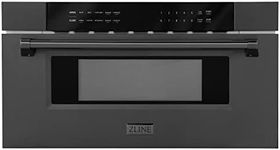
Buying Guide for the Best 30-Inch Built-In Microwave Ovens
Choosing the right 30-inch built-in microwave oven can significantly enhance your kitchen experience. Built-in microwaves are designed to fit seamlessly into your kitchen cabinetry, providing a sleek and integrated look. When selecting the best model for your needs, it's important to consider several key specifications that will impact the microwave's performance, convenience, and compatibility with your kitchen setup. Understanding these specifications will help you make an informed decision and ensure that the microwave you choose meets your cooking requirements and lifestyle.WattageWattage refers to the power output of the microwave oven and is measured in watts. Higher wattage means the microwave can cook food faster and more evenly. Typically, microwaves range from 600 to 1200 watts. For most households, a microwave with 900 to 1000 watts is sufficient for everyday cooking tasks. If you frequently cook larger meals or need faster cooking times, consider a model with higher wattage. Lower wattage models may be suitable for simple reheating and defrosting tasks.
CapacityCapacity is the internal size of the microwave oven, measured in cubic feet. It determines how much food you can cook at once. Built-in microwaves usually range from 1.0 to 2.2 cubic feet. If you have a larger family or often cook large dishes, opt for a microwave with a capacity of 1.5 cubic feet or more. For smaller households or limited kitchen space, a capacity of around 1.0 to 1.5 cubic feet should be adequate.
Sensor CookingSensor cooking technology automatically adjusts cooking time and power levels based on the moisture levels in the food. This feature ensures that your food is cooked evenly and prevents overcooking. If you value convenience and precision in cooking, look for a microwave with sensor cooking capabilities. It's particularly useful for reheating leftovers, cooking vegetables, and preparing various dishes without needing to set specific times and power levels manually.
Turntable vs. FlatbedMicrowaves typically come with either a turntable or a flatbed design. A turntable rotates the food to ensure even cooking, while a flatbed microwave uses advanced technology to distribute microwaves evenly without the need for rotation. Turntable models are more common and generally more affordable. Flatbed models offer more usable space and can accommodate larger dishes. Choose a turntable model if you prefer a traditional design and don't mind the rotating mechanism. Opt for a flatbed model if you need more flexibility in the types of dishes you can use and prefer a sleeker interior.
Control PanelThe control panel is the interface you use to operate the microwave. It can be either touchpad or dial-based. Touchpad controls offer more precise settings and often include preset cooking options for specific foods. Dial controls are simpler and may be easier to use for those who prefer a more straightforward interface. Consider your comfort level with technology and your cooking habits when choosing between these options. If you like having preset options and more control over settings, a touchpad may be the better choice. If you prefer simplicity, a dial-based control panel might be more suitable.
Installation TypeBuilt-in microwaves can be installed in various ways, such as over-the-range, in a cabinet, or within a wall unit. Over-the-range models often include a built-in exhaust fan and lighting for the cooktop below. Cabinet and wall unit installations provide a seamless look and save counter space. Consider your kitchen layout and where you plan to install the microwave. Over-the-range models are ideal if you need additional ventilation and lighting. Cabinet or wall unit installations are perfect for creating a streamlined, integrated appearance in your kitchen.
Additional FeaturesAdditional features can enhance the functionality and convenience of your microwave. Common features include convection cooking, which allows you to bake and roast, child safety locks, quick-start buttons, and defrost settings. Convection cooking is useful if you want a versatile appliance that can handle more than just microwaving. Child safety locks are essential if you have young children. Quick-start buttons and defrost settings add convenience for everyday use. Consider which additional features align with your cooking needs and lifestyle to make the most out of your microwave.