We Use CookiesWe use cookies to enhance the security, performance, functionality and for analytical and promotional activities. By continuing to browse this site you are agreeing to our privacy policy

Best 3D Scanners For 3D Printers

From leading brands and best sellers available on the web.
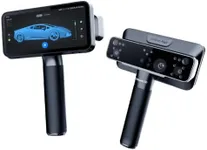
#1

Winner

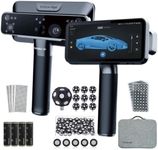
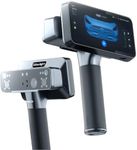
Revopoint Trackit Optical Tracking

Revopoint

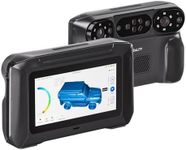
Revopoint Trackit Optical Tracking 3D Scanner for 3D Printing, Metrology-Grade Precision 0.02mm, Blue Laser Scans, Marker-Free Scans, Ultra-Realistic Texture Mapping for 3D Modeling

View on Amazon
#2
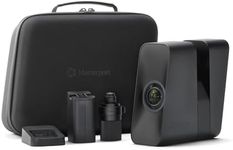
Matterport Pro3 3D Lidar Scanner Di

Matterport

Matterport Pro3 3D Lidar Scanner Digital Camera for Creating Professional 3D Virtual Tour with 360 Views and 4K Photography Indoor and Outdoor Spaces, High-Precision Mapping, Digital Twin Creation

View on Amazon
#3
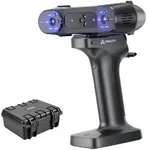
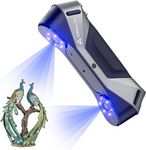
Revopoint MetroY Pro 3D Scanner for

Revopoint

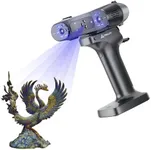
Revopoint MetroY Pro 3D Scanner for 3D Printing, Up to 0.01mm Precision, 34+15+1 Industrial Blue Laser Handheld Scanner, 62-Line Full-Field, Real-time Preview, Bulit-in Wi-Fi 6, Full-Color 3D Scan

View on Amazon
#4
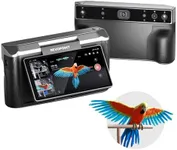
Revopoint MIRACO Plus 3D Scanner fo

Revopoint

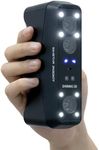
Revopoint MIRACO Plus 3D Scanner for 3D Printing Handheld, 3D Printer Scanner with Photogrammetry, Up to 0.02mm Precision, Full-Color Scan for Small to Large Objects, 32GB RAM

View on Amazon
#5
EinScan Pro HD Handheld 3D Scanner

EinScan

EinScan Pro HD Handheld 3D Scanner with Industrial Pack, Color Pack, Solid Edge Shining3D CAD Software, 0.2mm Resolution, 0.04mm Accuracy for Reverse Engineering, 3D Modeling, Art, Design, Healthcare

View on Amazon
#6
Revopoint MIRACO Pro Wireless 3D Sc

Revopoint

Revopoint MIRACO Pro Wireless 3D Scanner for 3D Printing, All-in-one Handheld 3D Printer Scanner, Up to 0.02 mm Precision, Full Color Scan Support for Small to Large Objects, 32GB RAM

View on Amazon
#7
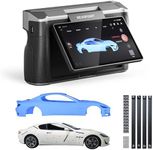
Shining3D EinScan Rigil 3D Scanner

Go3DPro

Shining3D EinScan Rigil 3D Scanner - Wireless & All-in-One Portable Scanner with Scanning Software, 0.04mm Accuracy, 50 Laser Lines for Reverse Engineering, Manufacturing, Art and Design
View on Amazon
#8
Creality 3D Scanner RaptorX, Handhe

Creality

Creality 3D Scanner RaptorX, Handheld Wireless Scanner with Metrology-Grade Accuracy 0.02mm,Industrial Blue Light, Fast Wi-Fi 6 Data Transmission Support 5-4000mm Objects for Windows Mac

View on Amazon
#9
EinScan H2 Handheld 3D Scanner Pro-

EinScan

EinScan H2 Handheld 3D Scanner Pro- High Texture Resolution 3D Scanner for 3D Printing with Built-in Color Camera, Handheld Infrared Light for IR Mode, Shining Version CAD Software Compatible

View on Amazon
#10
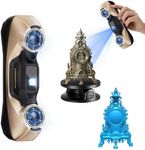
EINSTAR Rockit Wireless Laser 3D Sc

EinScan

EINSTAR Rockit Wireless Laser 3D Scanner, 19+19 Crossed Lines Blue Laser, 7 Parallel Lines Blue Laser, Support Marker-Free Laser 3D scanning and VCSEL Infrared Light
View on Amazon
How do we rank products for you?

Our technology thoroughly searches through the online shopping world, reviewing hundreds of sites. We then process and analyze this information, updating in real-time to bring you the latest top-rated products. This way, you always get the best and most current options available.

headphones-stars

Most Popular Categories Right Now

Buying Guide for the Best 3D Scanners For 3D Printers

Choosing the right 3D scanner for your 3D printer can significantly impact the quality and accuracy of your 3D prints. A 3D scanner captures the physical dimensions of an object and converts it into a digital 3D model, which can then be printed using a 3D printer. To make an informed decision, you need to consider several key specifications that will determine how well the scanner meets your needs. Understanding these specifications will help you select a scanner that aligns with your intended use, whether it's for professional, educational, or hobbyist purposes.
ResolutionResolution refers to the level of detail that the 3D scanner can capture. It is usually measured in millimeters (mm) or microns (µm). Higher resolution means the scanner can capture finer details, which is crucial for applications requiring high precision, such as creating detailed models for engineering or medical purposes. For general use or larger objects, a lower resolution may suffice. If you need to capture intricate details, look for a scanner with a resolution of 0.1 mm or better. For less detailed work, a resolution of 0.5 mm or higher might be adequate.
Scan VolumeScan volume is the maximum size of the object that the scanner can capture in a single scan. It is typically measured in cubic dimensions (length, width, height). This specification is important because it determines the size of the objects you can scan without needing to stitch multiple scans together. If you plan to scan small objects like jewelry or small parts, a scanner with a smaller scan volume will be sufficient. However, if you need to scan larger objects like furniture or sculptures, you will need a scanner with a larger scan volume.
AccuracyAccuracy indicates how close the scanned model is to the actual dimensions of the object. It is usually measured in millimeters (mm). Higher accuracy is essential for applications where precision is critical, such as in engineering, manufacturing, or quality control. For hobbyist or educational purposes, slightly lower accuracy might be acceptable. If your work requires high precision, look for a scanner with an accuracy of 0.1 mm or better. For less critical applications, an accuracy of 0.5 mm or higher may be sufficient.
Scanning SpeedScanning speed refers to how quickly the scanner can capture the data of an object. It is often measured in points per second or frames per second. Faster scanning speeds can save time, especially when scanning large or complex objects. This is particularly important in professional settings where time efficiency is crucial. For casual or occasional use, scanning speed may be less critical. If you need to scan objects quickly, look for a scanner with a high scanning speed. For less frequent use, a slower scanner may be adequate.
PortabilityPortability refers to how easy it is to move and use the scanner in different locations. Portable scanners are typically lightweight and compact, making them ideal for fieldwork or situations where you need to scan objects in various locations. If you plan to use the scanner in a fixed location, portability may be less important. For users who need to travel with their scanner or use it in different environments, a portable model is a better choice. For stationary use, a larger, less portable scanner might be acceptable.
Software CompatibilitySoftware compatibility refers to the scanner's ability to work with different 3D modeling and printing software. This is important because the scanned data needs to be processed and edited before printing. Ensure that the scanner is compatible with the software you plan to use, whether it's for professional CAD programs or simpler hobbyist applications. Check if the scanner comes with its own software and if it supports file formats that are compatible with your 3D printer. For seamless workflow, choose a scanner that integrates well with your existing software tools.